Wednesday, June 17, 2015

Companies tie up with riyada to support entrepreneurs in Oman


Muscat: A number of companies have joined hands with the Public Authority for Small and Medium Enterprises Development (riyada) to provide special offers to entrepreneurs.

Under the Memorandum of Understandings (MoUs) signed on Tuesday, the products and services of these companies in various fields, including training and development, will be offered to SMEs at discounted rates, said a riyada official.

“It shows the real partnership between the government sector and the private sector for the benefit of SMEs,” the official told reporters after the signing ceremony attended by Minister of Commerce and Industry Ali bin Masoud Al Sunaidy and a number of other senior officials and entrepreneurs.

The MoUs were signed with Oman Air, Omantel, Bank Nizwa, Tecnimont Civil Construction, Maire Tecnimont, Insight for Financial and Business Consulting, DHL Express, Oman Data Park and Prosper management consultancy.

The call centre of the Muscat Municipality will also be used for SMEs as part of the cooperation between the municipality and riyada.

The official noted that those entrepreneurs who are registed with riyada and hold ‘riyada card’ can utilise the services and products offered under the signed MoUs.

There are above 500 riyada card holders, he said.

He added that more companies are expected to come on board to support SMEs in cooperation with riyada.

The progress made on the decisions of the symposium for SMEs held at Sultan Qaboos University earlier this year was also discussed during the event. A number of government bodies, including the Ministry of Education, the Ministry of Higher Education, riyada, the Ministry of Housing, the Ministry of Civil Services, the Ministry of Finance and the Tender Board, delivered presentations on the latest steps that they have taken to implement the decisions related to SMEs.

According to the riyada official, good progress has been made in this regard.

Their presentations highlighted their efforts regarding a decision that calls for dedicating a department at each public organisation to follow up the implementation of allocating 10 per cent of the governmental purchases and tenders for SMEs and ensure accelerating the payment of their outstanding dues.

Citation from : Times Of Oman :http://goo.gl/5ob2wA

Monday, June 15, 2015

With CEO shakeup, Twitter under pressure to please advertisers


Twitter Inc's (TWTR.N) next chief executive officer faces a crucial challenge as the company seeks to appease Wall Street after this week's management shakeup - helping disaffected advertisers connect with users.
And many advertisers, analysts and investors say Twitter already has the right person for the job: not interim CEO Jack Dorsey but Adam Bain, the company's president and head of revenue, who has emerged as an early favorite.
Twitter's outgoing chief executive, Dick Costolo, resigned abruptly Thursday amid pressure from investors to increase the user base and improve what's known as direct response advertising, the most lucrative type on the microblogging site.


Those ads prompt users to take an action, such as signing up for a website or buying a product. Improving them is central to Twitter's ability to make more money.
Before joining Twitter in 2010, Bain served as president of the Fox Audience Network where he was responsible for monetizing advertising platforms across News Corp's (NWSA.O) web properties. At Twitter, he has helped aggressively grow the advertising platform. He holds many of the company's most valuable relationship with advertisers and understands the media business, advertisers said, and could help redirect Twitter so it meets advertisers' demands and makes more money. 
For now, advertisers hope the management change will "light a fire" under Twitter, said Adam Epstein, chief executive of adMarketplace, which works with search advertisers. Even though they have discussed ways to improve advertising with Twitter executives, the company has been slow to change.


"When you talk to Twitter, you can throw some great ideas on a whiteboard, but there seems to be a lack of urgency," Epstein said.
They also hope Twitter makes the site easier to use so that more people become regular users and click on ads. Advertisers also want Twitter to provide data that allows them to gather more information on consumers.
Twitter would not make an executive available to comment on Friday.
Among the challenges of advertising on Twitter are the site's fast-moving news scroll, which makes it less likely users will stop to click on an ad. Facebook and Instagram, by comparison, showcase photos and videos in ads and display them more effectively to users, making it more likely users will click on them.
In April, Costolo said Twitter was forced to cut rates for direct response ads after they failed to deliver as promised. That led the company to cut its revenue forecast for the year as it anticipated making $4 million to $5 million less each quarter.
Half a dozen ad executives interviewed by Reuters said they spend more money on rival platforms, such as Facebook and Google, because they have more users, better capture attention and provide more data on how advertisers can target consumers.
Dorsey, who served as CEO from 2007 to 2008 before management ousted him, said the CEO search has not yet begun but has not ruled out his interest in the job permanently. He said he would not change the company's strategy.
UNTAPPED POTENTIAL
Twitter's user base has been eclipsed by its competitors. It has 302 million users, compared with Facebook Inc's (FB.O) 1.4 billion and WhatsApp's 800 million.
Advertisers said the main problem lies in what they called Twitter's "untapped potential" in reaching its millions of users.
About 80 to 90 percent of users scan Twitter content but don't tweet, according to Affinio, which measures community engagement on digital platforms. Even though about 1 billion people have tried the service, most do not become regular users.
"Twitter needs to be able to build a product that consumers know and love and stay in," said Maura Tuohy, social director at Eleven Inc, an agency that helps brands advertise.
Twitter has taken steps to meet some ad buyers' demands. In April, it announced a partnership with Google's (GOOGL.O) online advertising service DoubleClick and marketing technology company TellApart, which helps advertisers measure ad views, clicks and calculate investment returns, to provide more data to advertisers. But it has not announced when those partnerships will go into effect.
But illustrating the complexity of the site's relationship with ads, a study conducted by Twitter found that some of its key attributes, such as including a hashtag or mentioning another account in a tweet, were actually harmful to advertisers.
Barry Lowenthal, president of Media Kitchen, a media planning and buying agency, said he uses Twitter for product announcements, such as a new fragrance, but does not regularly turn to Twitter for advertising.

"It has a very particular role," Lowenthal said. "We don't use it regularly like we do Facebook and Instagram."
Citation : taken from REUTERS EDITION US : http://goo.gl/TCXVVJ

Monday, June 8, 2015

China retreat from first place to importers of raw

STOP LOOKING AS WE ARE AT THE FRONT LINE

China's imports of oil from 11% in May fell compared to the year earlier, the biggest drop since November 2013 and recorded and lost its status as the largest importer of crude country in the world after that topped the list for the first time in the month of April.
And the payment of the decline and China's imports At a time when the markets are expected to see a glut after OPEC decision to keep output ceiling without Tgier- world prices for crude to fall on Monday.
General Administration of Customs data showed that China imported 23.24 million tons of crude in May.
Thus, China comes in second place after the United States, which imported just under 30 million tons, according to accounts from the reality of the US Energy Information Administration data.
And on a daily basis, China's imports amounted to 5.47 million barrels in May, down almost 26% from the record set in April and reach 7.37 million barrels per day.
In May, China imported 2.32 million tons of refined products while exported 2.44 million tons, exports exceeded imports by 12 thousand tons.

In April, China's exports of oil products imports exceeded after that the opposite is true in the first three months of the year.

citation : taken from CNBC Arabia :http://goo.gl/wW7DCJ

Several renewable energy power plants in Oman under construction

STAY FOCUSED WITH VENTURE ART

A number of solar power projects are in various stages of construction in Oman. Following the success of solar energy projects in Petroleum Development Oman ( PDO ), Rural Areas Electricity Co (RAECO) and Knowledge Oasis Oman (KOM), now the Public Authority for Electricity and Water (PAEW) is all set to use renewable energy (RE) for various purposes. The solar energy holds the potential to provide sufficient electricity to meet all of Oman's domestic electricity requirements and provide some electricity for export. PAEW, in conjunction with the International Renewable Energy Agency (IRENA), is considering what policy instruments would best help accelerate and support the economic and efficient deployment of RE technologies in the Sultanate. 

According to Dr Mustapha Taoumi, a representative of International Renewable Energy Agency (IRENA), "This region has the world's greatest technical potential for solar power generation." The RE industry could drive economic diversification and create jobs thereby help create wealth and added value to local economies. In order to facilitate the transition to a RE systems, IRENA has been working closely with Oman on a range of projects. RAECO proposes to set up four solar power plants -- in Ibri, Sharqiyah, Mudhaibi and Dhofar -- as pilot projects with a view to efficiently utilise renewable energy and thus reduce use of fossil fuels. Except for the Dhofar plant (500 kilowatts), other will be of 2,000 kilowatts each, according to Khaleel al Mandhari, who heads RAECO Renewable Energy Department. 

Similarly, a solar power project with a maximum authorised capacity of 303 kilowatts, is coming up at Al Mazyunah in the Dhofar Governorate. The 
PDO is already using solar energy to produce a daily average of over 50 tonnes of emission-free steam that feeds directly into existing thermal Enhanced Oil Recovery (EOR) operations at its Amal West field. There are several plans by PAEW and other organisations to capitalise on the abundance of sunshine. According to the recent '7-Year Statement (2015-2021)' of Oman Power and Water Procurement Company (OPWP), work on one or more solar-based power plants with an aggregate capacity of up to 200 megawatts (MW), may be initiated this year. 


Oman holds a huge potential for harnessing renewable energy and is keen to benefit from its several advantages such as reduction in use of fossil fuel, enhanced energy supply security and reduction in pollution. IRENA is extending cooperation in developing a business model to introduce Renewable Energy in all the sectors of the Omani economy particularly in the electricity sector, manufacturing sector and SMEs to accelerate jobs creation and added value to the local economy; desalination through Renewables (remote areas); and capacity building programme. Dr Mustapha says all GCC countries are embarking on a transformation, by turning to renewable energy for it can help meet rising domestic demand, economically and sustainably. 

Four years of successful real time continuous technical monitoring of the 6MW/year concentrator photo voltaic (CPV) demonstrator at KOM has given positive results such as cost-effectiveness, high yield energy production, and minimal water and maintenance requirements. Since May 2010, when the PEIE initiated this pilot project for R&D to test the validity of the CPV solar technology, the project has generated important data which has been assembled and integrated to create valuable knowledge about this application, a PEIE expert affirms. PEIE has also performed financial studies for CPV and PV applications on larger scales and the price has been between 70-80 baisa per kWh which is highly feasible and competitive and can even be lower than the cost of fossil fuel specifically for remote and rural areas when the subsidies are included in cost calculation. 

At a workshop involving several stakeholders from ministries, SQU, PEIE, and electricity distribution companies, it was revealed that the real price of electricity production per kWh and distribution to the customer, excluding subsidies, would be between 80 and 120 baisa per kWh for gas-based plants in Muscat governorate, and that for remote rural areas the cost of electricity production from diesel can exceed 150 baisa per kWh. "If the calculations generated from the workshop are appropriate the cost of utilising solar energy will be equal or even cheaper than gas-based plants and for sure much cheaper for remote and rural areas", said a PEIE official.

Citation - Taken From ZAWYA :  https://goo.gl/wdDvsf

Wednesday, June 3, 2015

Providing support for young Kuwaitis looking to develop business ideas "pivotal" - SMEs Fund chief

KUWAIT, June 3 (KUNA) -- Providing support for young Kuwaitis looking to develop business ideas has a pivotal part to play in driving greater private sector growth, the National Fund for Small and Medium Enterprise Development's Executive Chairman Dr. Mohammad Al-Zuhair said Wednesday.
Al-Zuhair told the global publishing, research and consultancy firm Oxford Business Group (OBG) that the National Fund (NF) recognises the importance of identifying talent and an entrepreneurial spirit, including the willingness to take a risk, early on.
"Incubation for us starts at universities, the ideal place to capture the best and most creative ideas of an ambitious youth," he said. "Once students graduate there is social pressure to find a job immediately, which leads graduates to register for a government post. Our aim is to change this." The Fund was established under law 98/2013 to support the growth of small and medium-sized enterprises (SMEs), as part of a drive to create new and productive jobs in untapped areas of the economy, particularly in the non-oil sector. It provides financing and other business assistance where gaps have emerged in the market.
Al-Zuhair told OBG that the Fund will target three industry sectors in its initial phase of operation. This, he explained, drew on market research and analysis undertaken to identify which areas of business generate the highest levels of interest amongst the younger generation.
"The first will focus on ICT, which will encourage products with added value; the second on light manufacturing to primarily serve larger industries; the third on media and creative design" he said. Other applications will also be considered under a fourth program for projects that do not fit neatly into any of the three categories. He added that encouraging the private sector to lead the way in SME expansion remained a priority for the NF and is an integral part of its strategy.
The full interview with Al-Zuhair will appear in The Report: Kuwait 2015, OBG's forthcoming guide to the country's economic activity and investment opportunities. The report will be a vital guide to the many facets of the country, including its macroeconomics, infrastructure, banking, and other sectoral developments.

Project Report - Feasibility Report


Oxford Business Group is a global publishing, research and consultancy firm, which publishes economic intelligence on the markets of the Middle East, Africa, Asia and Latin America and the Caribbean. Through its range of print and online products, OBG offers comprehensive and accurate analysis of macroeconomic and sectoral developments, including banking, capital markets, insurance, energy, transport, industry and telecoms. The Report: Kuwait 2015 will be produced in partnership with the Kuwait Direct Investment Promotion Authority (KDIPA). (end) hb 

Taken from - KUNA - Kuwait News Agency - http://goo.gl/nI4U6e

Tuesday, June 2, 2015

Saudi Arabia Opening for Investment

Infrastructure Projects in Saudi Arabia: Getting qualified

By Daniel Goodwin - d.goodwin@tamimi.com
With the Kingdom of Saudi Arabia (KSA) rolling out a succession of major public infrastructure projects in recent years, KSA's foreign investment policy makers have made it clear that they are keen to see more foreign participation in those projects. As the economic powerhouse of the GCC with a strong pipeline of work in the years ahead, KSA is on the radar for foreign contractors looking to expand in the Middle East. Often, to be eligible to bid for these larger projects, a contractor must be pre-qualified.
Pre-qualification for government contracts in Saudi Arabia
Pre-qualification is used to identify contractors who have the necessary experience, know-how and resources to successfully carry out a particular scope of work or project.

Looking to Opportunities in GCC

In KSA the pre-qualification process, where utilised, is itself a competitive tender process and is governed by the Government Tender and Procurement Law ("GTPL") and its implementing regulations ("GTPR").
The specific requirements for pre-qualification for government tenders vary between different government agencies and also from project to project. Generally for government projects the GTPR mandates that contractors must:
  • Have a Commercial Registration in KSA. For foreign contractors this first requires a licence from the Saudi Arabian General Investment Authority ("SAGIA").
  • Be registered with the General Organisation for Social Insurance.
  • Have a tax or zakat certificate.
  • Have a Saudization certificate.
  • Have a certificate of membership of the Chamber of Commerce.
  • Be registered with the Ministry of Labour.
  • Have a requisite Contractor Classification issued by the Ministry of Municipal and Rural Affairs ("MOMRA") to carry out the work required. This will depend on the type of work specified and the value of the contract.
Generally, though it may vary between various government entities, other pre-qualification requirements may require the contractor to:
  • Have no conflict of interest (including for any proposed subcontractors).
  • Have no recent instances of contractual non-performance (which could be within say the past five years).
  • Meet required financial levels, provide audited financial statements, and be solvent with no recent history of liquidation, bankruptcy or defaults (say within the past five years).
  • Have certain annual turnovers (depending on the project requirements).
  • Meet specific experience requirements depending on the precise nature of the project.
  • Declare any fees, gratuities, payments or inducements paid to any party in respect of pre-qualification or the bidding or tender process.
Streamlined processes for foreign contractors
A foreign contractor that does not have a commercial presence / registration in KSA may still qualify to bid for a government contract.
The recent Council of Ministers Resolution No. 405, released in August 2014, applies to contractors in the areas of: construction; roads; water and sewage works; implementation of works for water conveyance; desalination plants and electric power; electrical, mechanical, electronic, industrial and marine works; and communications technology.
This resolution allows contractors that are licensed as first class in their home country, or certain 'well known' contractors, to obtain a temporary certificate from SAGIA allowing the contractor to bid on government projects (but only one at a time). The contractor may then fulfil the other requirements (set out above) after it is awarded a government contract.
If successful in being awarded a government contract, the foreign contractor must establish an entity in KSA and obtain a temporary commercial registration. A temporary commercial registration licence must be applied for within 30 days of the date the contract is awarded and a copy of the award letter or the project execution contract signed by the government authority must be submitted to SAGIA.
A temporary commercial registration licence from SAGIA:
  • Will be limited to the activities necessary to carry out the project awarded by the KSA government authority.
  • Will be limited to a time period linked to the expected duration of the project awarded by the KSA government authority.
  • Will be linked to the KSA government authority that awarded the project.
  • Must be renewed every 12 months and the consent of the KSA government authority that awarded the project is required.
As a further refinement, a foreign contractor classified in the first class in its country, or which has implemented a project with a value of not less than SAR500 million, has not less than 2,000 employees and total assets of not less than SAR50 million, can apply for a SAGIA licence using the recently introduced Fast Track process. SAGIA states that the Fast Track system allows a licence to be issued in as few as five days from acknowledgement of a completed application.
Joining a consortium to bid for contracts in KSA
A consortium is essentially an agreement between a number of parties to undertake a joint venture. If a foreign entity is a joint venture partner it must hold a SAGIA foreign investment licence and a Commercial Registration issued by the Ministry of Commerce and Industry. Usually (but not always) the consortium will establish a KSA limited liability company to execute the contract. A consortium intending to bid for a government contract will be required to submit a copy of the consortium agreement.
For a foreign contractor bidding for KSA government contracts as part of a consortium, there may be a need for the foreign contractor to have a KSA SAGIA licence, depending on the terms of the Request for Proposal or Tender. Some may require KSA registration first, others may not. The SAGIA licence will need to be obtained by the new JV company (if there is one) otherwise it must be obtained by the foreign company setting up an entity in KSA as part of an unincorporated consortium.
Pre-qualifying for private sector contracts
Tender and pre-qualification processes for private sector contracts in KSA are not governed by specific laws.
Requirements for pre-qualification issued by private companies in KSA (other than government procurement) vary depending on the level of sophistication of the company, whether the company has experience in carrying out similar past projects, and the value and complexity of the work. However, most of the information required for government pre-qualification is generally also requested in private sector tenders.
Other pre-qualification requirements may include:
  • Past occupational health and safety record.
  • Any ISO or similar compliance.
  • References from past employers, head-contractors or sub-contractors.
  • A requirement to provide a financial guarantee / bond.
It may be a pre-qualification requirement that all bidders already have a KSA established entity.
Inducement of government officials
KSA has laws that keep the tender process transparent, fair and free from impropriety.
The Anti-Bribery Law 1992 makes it clear that the receipt of any benefit or advantage (financial or non-financial) concerning any government official would be considered a bribe and includes a promise, gift, bounty, favour or recommendation.
Prohibited circumstances include not only when officials demand a bribe for themselves or another person for performing their normal duties (or abstaining from performing such duties) but also receiving what is deemed to be a bribe without demand by the official concerned.
There are severe penalties for bribery, which vary according to the severity of the circumstances. The most severe penalties are 10 years imprisonment and/or a SAR1 million fine. The lesser crimes still carry imprisonment penalties of up to 3 years and/or a fine of up to SAR100,000.
Bribes or inducements in the private sector are illegal under Shari'ah principles.
Conclusion
Qualifying as an approved bidder is the first part of the tender process and contractors now have a more streamlined way to qualify as a bidder in KSA.
The willingness of the government to bring in more streamlined processes for contractors entering KSA is a reflection of the significant amount of work being carried out and the need for experienced foreign contractors to bring their know-how and resources to implement projects in the Kingdom of Saudi Arabia.
With the continued rollout of world class infrastructure projects across the Kingdom, the demand for foreign contractors and suppliers will remain strong in the years ahead. Knowing how to pre-qualify to tender on those projects is an essential first step for any contractor looking to win tenders in KSA.
© Al Tamimi & Company 2015

© Copyright Zawya. All Rights Reserved.
http://goo.gl/tRmqLV

Saturday, April 18, 2015

Start-Up Value Matrix and Our Solution


Building Ideas Creating Value - Venture Art, Small Business, Entrepreneurship, Start-Up
Venture Art - Building Ideas Creating Value

Building Ideas Creating Value- Value Matrix  Entrepreneurship, Start-Up , Small Business,
Venture Art - Value Matrix - How We Build Future


Start-Up  Developing Ideas Creating Value - Venture Art
Venture Art - The Process of Development

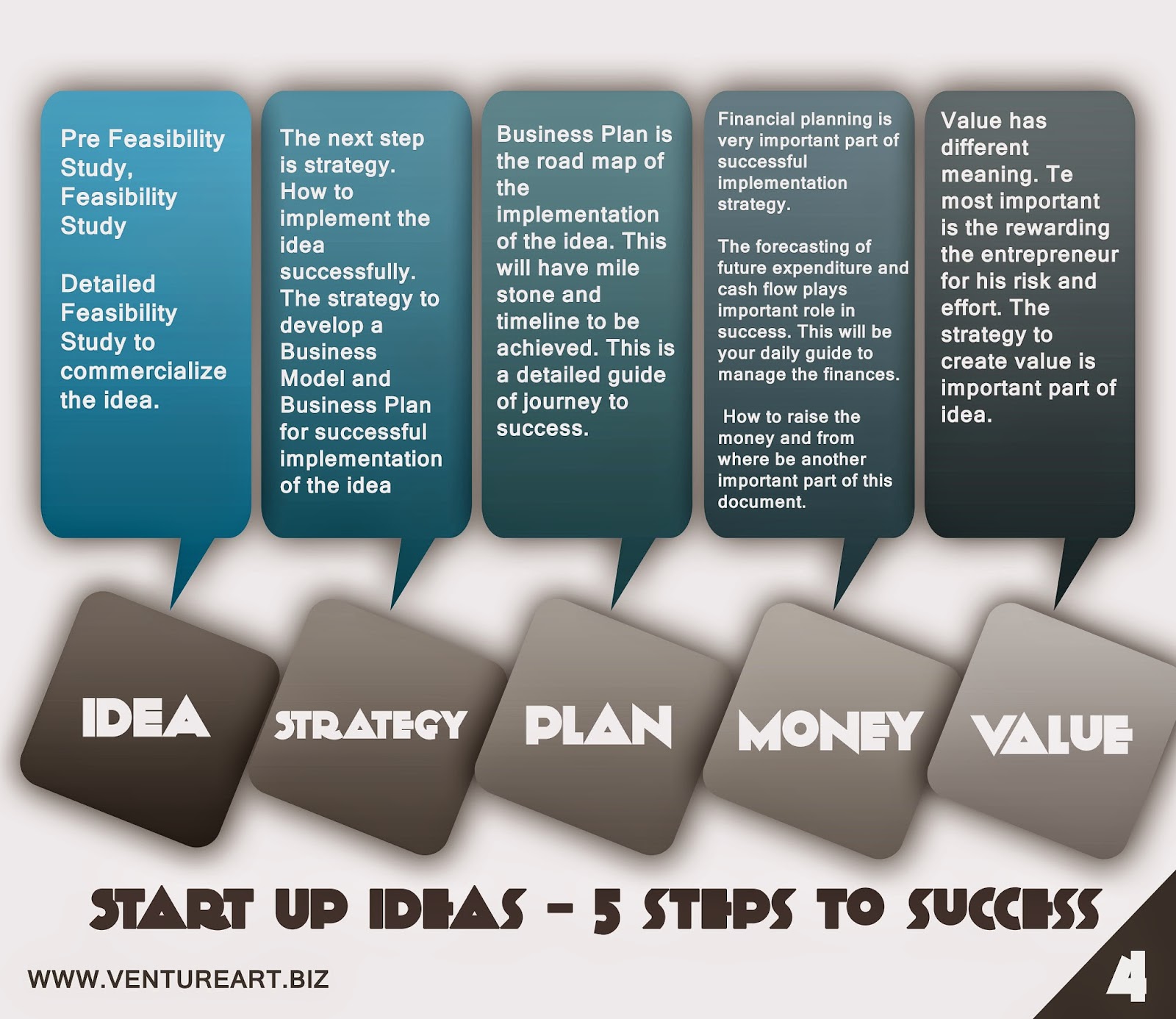
Venture Art - 5 Step Process to Create Value and Build Ideas

Venture Art - Value Creation Road Map
Start-Up Road Map to Success - Building Ideas 

Ideas to Business - Step by Step Solution
Building Ideas - Venture Art

Venture Art Start-Up Solution
Venture Art