Showing posts with label micro projects. Show all posts

Saturday, October 10, 2015

TECH STARTUPS CHASE SOMETHING OTHER THAN PROFITS


At a demo day in San Francisco on Wednesday, Joyce Kim’s presentation of her financial tech startup sounded a lot like a tech startup pitching venture capitalists for funding. She scrolled through a slide deck and stood at a podium, sporting a t-shirt of her startup.
Until she came to her financials. In a pilot, people around the world used her tech to complete 6 million transactions country to country, she said. The fees she collected came out to approximately 20 cents.
Ms. Kim’s venture is not a typical tech startup. It is not trying to join the billion dollar club, and its goal is not to make money.
Her startup, Stellar.org, is one of a new breed of tech non-profits whose ambition is for technology to help solve some of the world’s most intractable problems such as global poverty and climate change. Ms. Kim participated in Fast Forward, an accelerator funded in part by Google.org, the philanthropic arm of Alphabet Inc.Google+0.64%, and investment management corporation BlackRock Inc.
Also this week, startup accelerator Y Combinator announced a new research lab, YC Research, designed to tackle work that requires a long time horizon and seeks to answer very open-ended questions.
These non-profit startups are doing everything their for-profit peers are doing: modeling themselves on lean startups, writing scalable business models and attending accelerators.
“We’re not doing this with the goal of helping YC’s startups succeed or adding to our bottom line. At the risk of sounding cliché, this is for the benefit of the world,” wrote Y Combinator president Sam Altman.
The problems these startups take on resonate with what many in Silicon Valley see as their mission to solve the world’s ills.
The demo day in San Francisco was the culminating event of Fast Forward’s 13-week accelerator program. Started in 2014 by software entrepreneur Kevin Barenblat, founder of social-marketing company Context Optional and social entrepreneur Shannon Farley, founding executive director of Spark, the largest network of Millennial philanthropists, Fast Forward provides workshops, mentoring and $25,000 in seed money to a cohort of tech non-profits. Google.org and BlackRock pitched in $1 million.
“The non-profits said they felt like weirdos because they didn’t fit into tech accelerators as a non-profit, and they also didn’t fit into non-profit communities as tech companies. This program is designed to bridge these connections,” Mr. Barenblat said.
In addition to Stellar.org, eight other startups also presented. They included TalkingPoints, a platform for parents who don’t speak English to text a child’s teacher and Callisto, a confidential way to document and report sexual assault. The founders were more diverse than those at most pitch events. Of the nine founders on stage Wednesday evening, just two were white men.
The approximately 60 angel investors at the demo day opened their wallets after the presentations ended, handing out about $150,000 in funding, according to Mr. Barenblat.
“People can see the passion in the entrepreneurs, they understand what their challenges are,” said Mr. Barenblat.
At the pitch event, held in warehouse-style San Francisco office of Alphabet Inc., Ms. Kim played up her site’s technical chops. “Under the hood, it’s a decentralized, distributed database,” she said. Before pursuing this startup, Ms. Kim worked in venture capital before launching the startup a year and a half ago.

Instead of measuring profits, Ms. Kim determines her success by how many people her startup is able to impact. Her goal is to create the financial system for the world’s poor. There are currently 2 billion “unbanked” people in the world, so she has her work cut out for her.
Citation from Wall Street Journal (blog) : http://goo.gl/5cSvLo

Wednesday, July 1, 2015

STARTUPS SERVING THE 99 PERCENT WILL BE THE NEXT BILLION-DOLLAR COMPANIES


Many fast-growing companies in Silicon Valley have one thing in common: they cater to a small, affluent, urban population — the 1 percent. Residents in high-cost cities like San Francisco, New York and Los Angeles can order an array of goods and services from their mobile phones.
These startups, including Uber, Instacart and a host of food delivery apps like Munchery, GrubMarket, Blue Apron, and Postmates, eventually have plans to broaden their offerings to attract middle-income consumers. This is the classic trickle-down business model.
As Farhad Manjoo wrote in The New York Times, “The rich subsidize the rest of us — were it not for the suckers who spent more than $10,000 on early versions of the Mac, Apple might not have survived to build the iPhone.”

As a venture capitalist who has invested in both Chinese and U.S. startups since 2005, I’ve backed several companies leveraging the trickle-down model, such as GrubMarket. But, now I see it also makes sense for some founders to take the opposite approach: mass market first.

Going Mass Market First

Attacking a mass market from day one may seem daunting, but it’s not impossible — just ask startups in China. Many Chinese startups go after the mass market right out of the gate, as hundreds of millions of consumers there fall into the middle class. There also are many high-net-worth individuals in China, with plenty of companies chasing them, but the sheer size of the Chinese middle class makes the mass-market-first business model viable. Companies like Alibaba, Tencent, Baidu and YY all went after the mass market right away.
Founders with a global vision to serve the world’s middle class have the chance to create billion-dollar companies with lasting growth potential.
The huge growth in global smartphone adoption will now make this approach more common outside of China. Unlike the first wave of late 1990s (Internet companies that targeted higher-income consumers who could afford expensive computers), today’s startups can quickly reach billions of middle-income consumers who only need a simple smartphone and low-cost data plan to get online.
My favorite current example of the mass-market-first model is Xiaomi, one of the world’s most valuable private companies. Like Apple, Xiaomi makes high-quality, coveted smartphones. Unlike Apple, Xiaomi’s phones are priced very affordably. Companies like Xiaomi with mass-market appeal not only grow faster, but survive market downturns better than companies catering to the 1 percent.

Sectors Ripe For Mass Market First

Consumer Hardware. We already have the ultimate example of a successful mass-market-first company: Xiaomi. And not only is Xiaomi creating low-cost, high-quality hardware, it’s putting customers at the center of the entire design process. Xiaomi collects tons of usage data and customer feedback, and integrates these findings into future products. Xiaomi now has a massive customer base; the company sold 61 million phones in 2014 and recently broke a world record by selling more than 2 million phones in one day. With that scale, a whole startup ecosystem has sprung up to sell mass-market accessories and home appliances controlled by Xiaomi phones, including Zimi (battery packs), 1More (headphones) and Huami (activity trackers).
E-Commerce. When it comes to e-commerce, Chinese companies like Alibaba and JD.comnailed the mass-market-first approach, and similar models are beginning to emerge in the U.S. Whereas U.S. e-commerce startups tend to go after high-end consumers first (including Etsy, Gilt Groupe and monthly subscription boxes like Birchbox), Chinese e-commerce startups often target middle-income consumers first.
In China, Mogujie and Meilishuo.com have achieved mass reach selling low-cost items like clothes, baby goods and household goods. In the U.S., a great example of a mass-market-first startup is Wish, a smartphone shopping platform offering low-cost products shipped directly from China and elsewhere. It has a massive following of U.S. and European shoppers looking for bargains across its four apps (Wish, Geek, Mama and Cute).
Emerging e-commerce giants in India, such as Flipkart and Snapdeal, are also succeeding with mass market first. Companies that sell every-day items to millions of people, not those selling special treats and luxury goods to the 1 percent, will have staying power when the next economic downturn hits.
On-Demand Services. Though most mobile apps for on-demand services cater to tech-savvy early adopters, some can and will succeed with the mass market. In China, that’s already the case. For example, while Uber perfected the top-down approach, starting with luxury town cars and expanding into shared cars with UberX, Didi Dache in China and GrabTaxi in Southeast Asia started with the mass market first. These companies recruited existing taxi drivers for low-cost rides, and are only now expanding into luxury services.
Meituan, a daily deals site, and Wuba, the ‘Craigslist of China’, also offered their services via mobile app to the mass market first. Some on-demand mobile apps that could appeal to middle-income consumers in the U.S. include Boxed, which delivers a low-cost ‘club store’ shopping experience, and any other services that offer affordable necessities,
While it’s perhaps more natural to build a mass-market startup in China and even India, it’s far from impossible in the U.S. More importantly, the best startups taking the mass-market-first approach know they must go global from day one. Catering to the 1 percent in San Francisco and New York may deliver revenue and high margins in the short term, but founders with a global vision to serve the world’s middle class have the chance to create billion-dollar companies with lasting growth potential.


 Citation from TechCrunch:  http://goo.gl/ZrG1Jd

Monday, June 8, 2015

Several renewable energy power plants in Oman under construction

STAY FOCUSED WITH VENTURE ART

A number of solar power projects are in various stages of construction in Oman. Following the success of solar energy projects in Petroleum Development Oman ( PDO ), Rural Areas Electricity Co (RAECO) and Knowledge Oasis Oman (KOM), now the Public Authority for Electricity and Water (PAEW) is all set to use renewable energy (RE) for various purposes. The solar energy holds the potential to provide sufficient electricity to meet all of Oman's domestic electricity requirements and provide some electricity for export. PAEW, in conjunction with the International Renewable Energy Agency (IRENA), is considering what policy instruments would best help accelerate and support the economic and efficient deployment of RE technologies in the Sultanate. 

According to Dr Mustapha Taoumi, a representative of International Renewable Energy Agency (IRENA), "This region has the world's greatest technical potential for solar power generation." The RE industry could drive economic diversification and create jobs thereby help create wealth and added value to local economies. In order to facilitate the transition to a RE systems, IRENA has been working closely with Oman on a range of projects. RAECO proposes to set up four solar power plants -- in Ibri, Sharqiyah, Mudhaibi and Dhofar -- as pilot projects with a view to efficiently utilise renewable energy and thus reduce use of fossil fuels. Except for the Dhofar plant (500 kilowatts), other will be of 2,000 kilowatts each, according to Khaleel al Mandhari, who heads RAECO Renewable Energy Department. 

Similarly, a solar power project with a maximum authorised capacity of 303 kilowatts, is coming up at Al Mazyunah in the Dhofar Governorate. The 
PDO is already using solar energy to produce a daily average of over 50 tonnes of emission-free steam that feeds directly into existing thermal Enhanced Oil Recovery (EOR) operations at its Amal West field. There are several plans by PAEW and other organisations to capitalise on the abundance of sunshine. According to the recent '7-Year Statement (2015-2021)' of Oman Power and Water Procurement Company (OPWP), work on one or more solar-based power plants with an aggregate capacity of up to 200 megawatts (MW), may be initiated this year. 


Oman holds a huge potential for harnessing renewable energy and is keen to benefit from its several advantages such as reduction in use of fossil fuel, enhanced energy supply security and reduction in pollution. IRENA is extending cooperation in developing a business model to introduce Renewable Energy in all the sectors of the Omani economy particularly in the electricity sector, manufacturing sector and SMEs to accelerate jobs creation and added value to the local economy; desalination through Renewables (remote areas); and capacity building programme. Dr Mustapha says all GCC countries are embarking on a transformation, by turning to renewable energy for it can help meet rising domestic demand, economically and sustainably. 

Four years of successful real time continuous technical monitoring of the 6MW/year concentrator photo voltaic (CPV) demonstrator at KOM has given positive results such as cost-effectiveness, high yield energy production, and minimal water and maintenance requirements. Since May 2010, when the PEIE initiated this pilot project for R&D to test the validity of the CPV solar technology, the project has generated important data which has been assembled and integrated to create valuable knowledge about this application, a PEIE expert affirms. PEIE has also performed financial studies for CPV and PV applications on larger scales and the price has been between 70-80 baisa per kWh which is highly feasible and competitive and can even be lower than the cost of fossil fuel specifically for remote and rural areas when the subsidies are included in cost calculation. 

At a workshop involving several stakeholders from ministries, SQU, PEIE, and electricity distribution companies, it was revealed that the real price of electricity production per kWh and distribution to the customer, excluding subsidies, would be between 80 and 120 baisa per kWh for gas-based plants in Muscat governorate, and that for remote rural areas the cost of electricity production from diesel can exceed 150 baisa per kWh. "If the calculations generated from the workshop are appropriate the cost of utilising solar energy will be equal or even cheaper than gas-based plants and for sure much cheaper for remote and rural areas", said a PEIE official.

Citation - Taken From ZAWYA :  https://goo.gl/wdDvsf

Monday, November 12, 2012

Dare to Dream

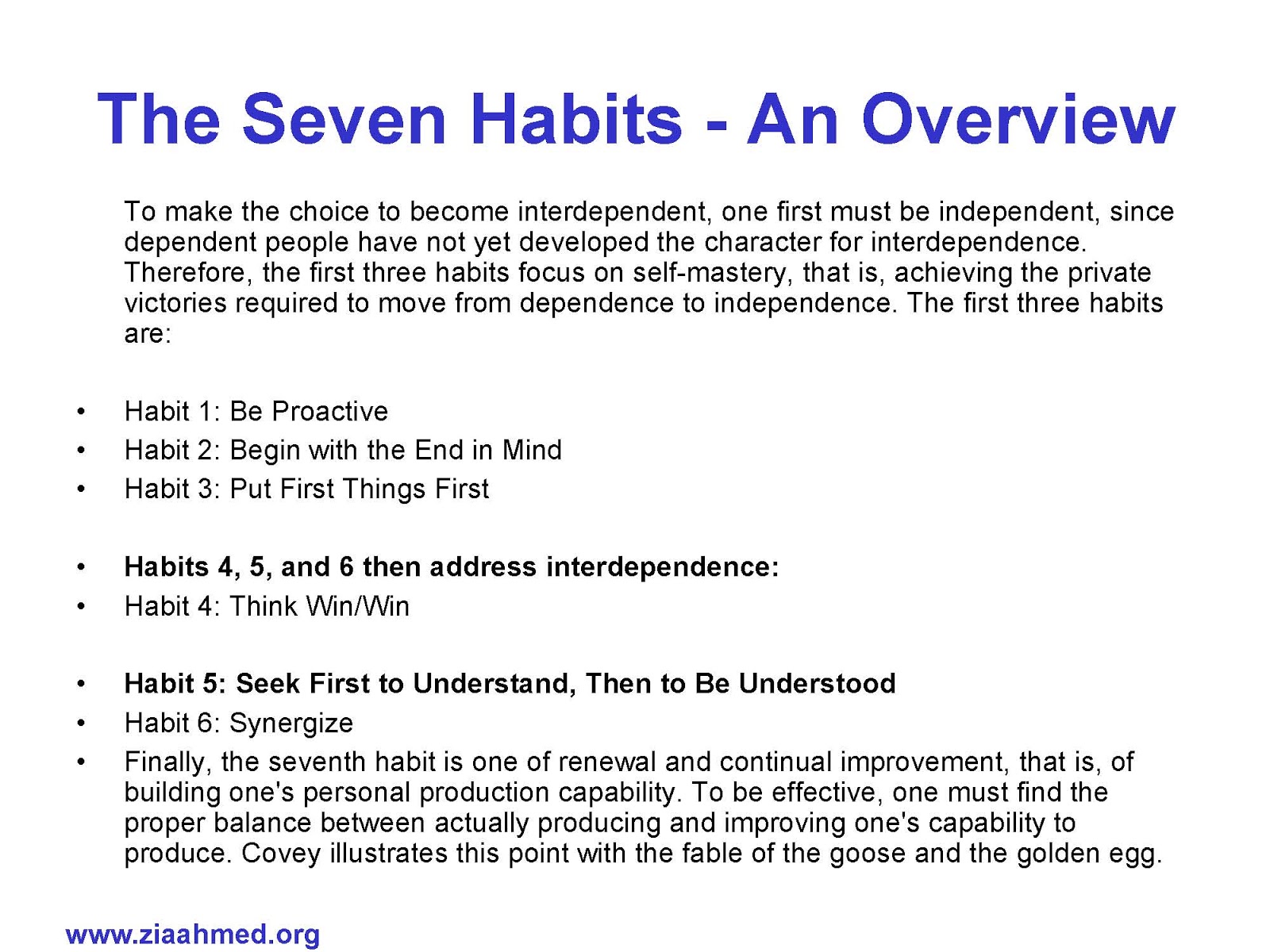
Habits to Success

Who are You


Know Yourself

Habits

The Matrix of Success

Habits

Be Proactive

Be Proactive

Be Proactive

Begin with End in Mind

Begin with End in Mind

Begin with End in Mind

First Things First

First Things First

First Things First Matrix

Win - Win is Way Forward

Win - Win is Way Forward

Win - Win is Way Forward

Know Them Well

Know Them Well

Know Them Well

Maximize The Energy

Maximize The Energy

Maximize The Energy

The Success Has Arrived

The Success Has Arrived

The Success Has Arrived

The Success Has Arrived

The Success Has Arrived

We Will Help You To Reach The Destination 

We Will Help You To Reach The Destination